
Why the Fuvahmulah Marine Ecosystem is Healthy & Rich
Sharing is caring!
Published on 13 Aug, 2026
Photos & Blog Written By: Alham - Director of Dive Operations
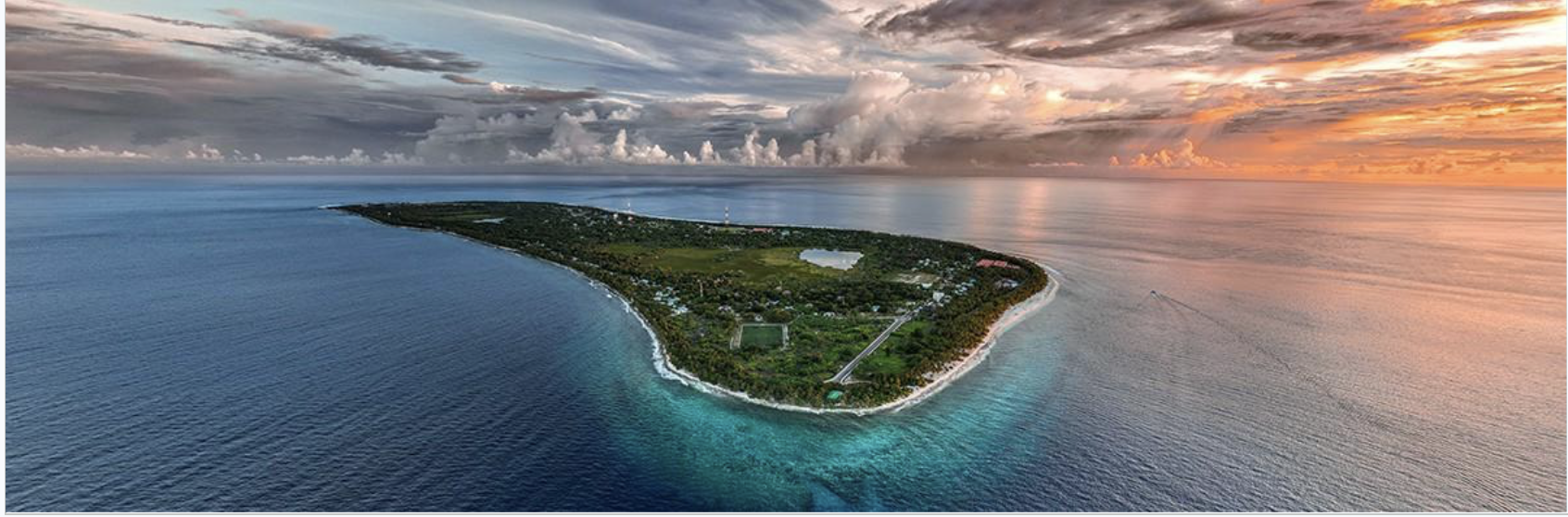
Nestled in the deep south of the Maldives, Fuvahmulah is unlike any other Maldivian island. Instead of being part of a typical atoll system surrounded by a shallow lagoon, Fuvahmulah is an isolated oceanic island rising directly from the Indian Ocean.
This unique setting places the island at the intersection of shallow coral reef habitats and deep oceanic waters, creating exceptional opportunities to encounter both reef species and large pelagic animals.
For divers, this means an underwater environment where tiger sharks, oceanic manta rays, thresher sharks, whale sharks and large schools of pelagic fish can be encountered alongside vibrant coral communities and diverse reef life.
But what makes Fuvahmulah so special?
The answer lies in a combination of geography, ocean currents, reef habitats, food availability and its connection to the open Indian Ocean.
An Oceanic Island Unlike the Rest of the Maldives
Fuvahmulah is geographically different from most islands in the Maldives.
Rather than sitting within a conventional atoll lagoon, the island stands independently in the Indian Ocean. Its underwater slopes descend rapidly into deep water, creating a close connection between the island's reefs and the open ocean.
This geography is particularly important for diving.
Large pelagic species such as sharks, rays and tuna are able to move close to the island while reef communities occupy the shallower sections of the underwater environment.
For divers, this creates an unusual combination: healthy reef habitats on one side and deep-ocean encounters on the other.
It is this proximity to deep water that contributes to Fuvahmulah's reputation as one of the world's most exciting destinations for big-animal diving.
Strong Ocean Currents Bring Life to the Reef
Fuvahmulah is exposed to the open Indian Ocean and experiences dynamic ocean conditions and currents.
These moving waters help transport plankton and organic material through the surrounding marine environment, supporting a productive food web.
At the foundation of this system are microscopic organisms such as phytoplankton and zooplankton. These organisms support small fish and filter-feeding animals, which in turn become prey for larger reef fish and pelagic predators.
The result is a connected marine food web extending from microscopic organisms to some of the ocean's largest predators.
This productivity is one of the reasons Fuvahmulah can attract such a remarkable variety of marine life.
Diverse Coral Reef Habitats
Fuvahmulah is not only about sharks.
Its underwater landscape includes coral reefs, reef slopes, walls, rocky formations and areas dominated by large gorgonian sea fans.
These habitats provide shelter, feeding grounds and nursery areas for a wide range of marine organisms.
Schools of anthias, chromis, damselfish, butterflyfish, surgeonfish, wrasses, angelfish and groupers contribute to the complexity of the reef ecosystem.
Healthy and structurally complex reef habitats are important because they support marine life at many different levels of the food chain.
For underwater photographers, they also create a striking contrast between colourful reef environments and the large pelagic animals that pass through the blue.
Giant Sea Fan Gardens
One of Fuvahmulah's most impressive underwater features is its spectacular gorgonian sea fan gardens.
At sites such as Sea Fan, large sea fans cover sections of the reef, creating dramatic underwater landscapes.
These organisms are more than beautiful subjects for underwater photography.
Gorgonian corals contribute to reef complexity by creating additional surfaces and shelter for small marine organisms. Tiny crustaceans and other reef creatures can live among their branches, while their three-dimensional structures provide habitat for small fish and other organisms.
For divers, swimming through a sea fan-covered reef is one of the most distinctive experiences Fuvahmulah has to offer.
Underwater Cleaning Stations
Another fascinating feature of Fuvahmulah's marine environment is the presence of cleaning stations.
At these locations, cleaner fish and cleaner shrimp remove parasites and dead tissue from larger marine animals.
This creates remarkable opportunities to observe natural behaviour underwater.
Depending on the site and conditions, divers may encounter animals such as:
- Tiger sharks
- Thresher sharks
- Oceanic manta rays
- Eagle rays
- Large groupers
- Giant trevallies
The larger animal approaches or remains near the cleaning area while cleaner organisms perform their role.
These interactions are an excellent example of the complex relationships that exist within a healthy marine food web.
For divers and underwater photographers, cleaning stations can also provide exceptional opportunities to observe large animals at relatively close range while they display natural behaviour.
A Food Web Capable of Supporting Ocean Giants
Large predators require substantial food resources.
Fuvahmulah's marine environment supports a variety of schooling and pelagic fish, including fusiliers, scads, rainbow runners, trevallies, sardines and other schooling species.
These smaller and mid-sized fish form important links in the marine food web.
Larger predators such as tuna, giant trevallies, wahoo and barracuda feed higher up the food chain, while sharks and other apex predators occupy an even higher trophic level.
This interconnected food web helps explain why Fuvahmulah can attract such a diverse range of large marine animals.
Fuvahmulah: A World-Class Shark Diving Destination
Fuvahmulah has become internationally recognised for its exceptional shark diving.
Among the species divers may encounter around the island are:
- Tiger sharks
- Thresher sharks
- Silvertip sharks
- Grey reef sharks
- Whale sharks
- Oceanic whitetip sharks
- Scalloped hammerheads, depending on season and conditions
- Sand tiger sharks, on rare occasions
The diversity of shark species is one of the reasons Fuvahmulah has become a bucket-list destination for experienced divers and underwater photographers.
Tiger Sharks: Fuvahmulah's Signature Encounter
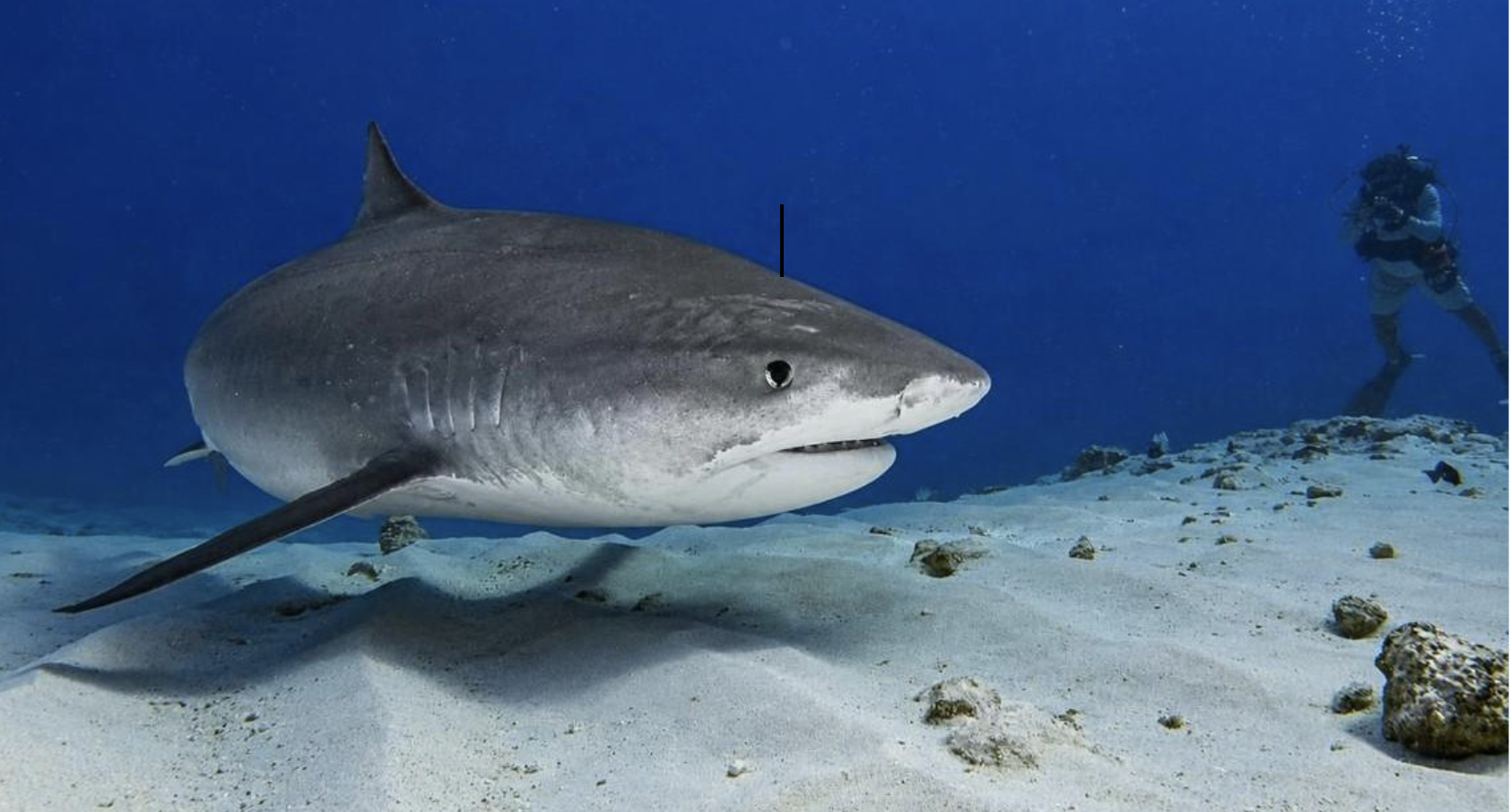
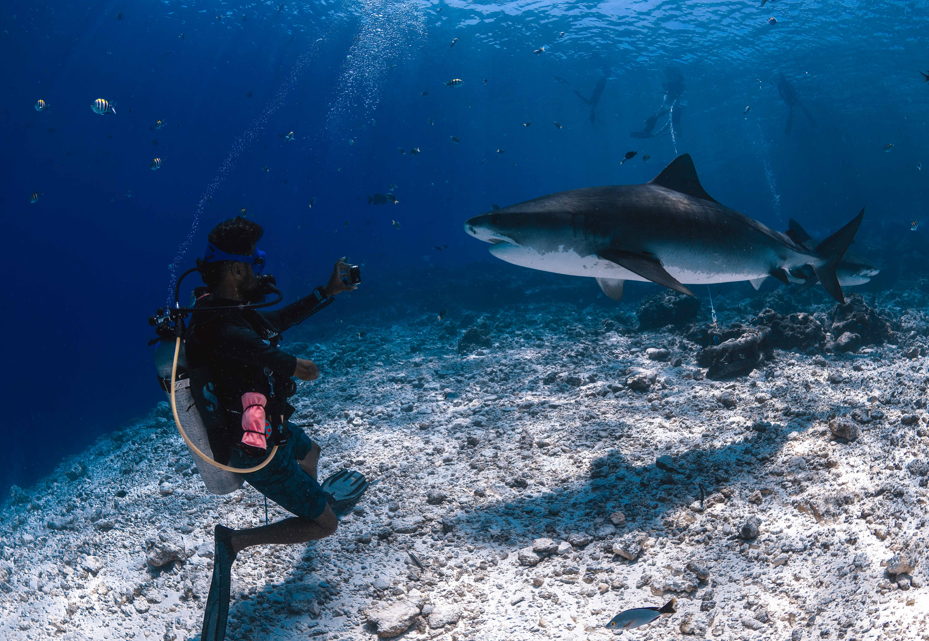
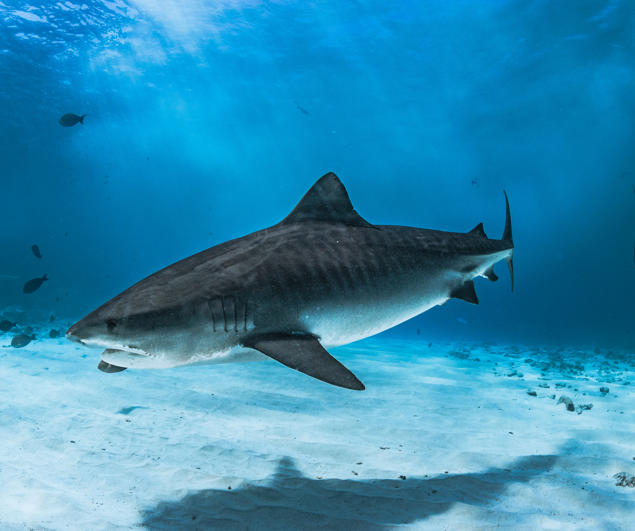
The tiger shark is undoubtedly one of Fuvahmulah's most iconic marine animals.
The opportunity to encounter these powerful sharks has made Fuvahmulah famous among the international diving community.
For divers visiting specifically for tiger sharks, the island offers something particularly special: the chance to experience these animals within a broader ecosystem that also includes manta rays, whale sharks, schooling fish, coral reefs and other pelagic species.
Fuvahmulah is therefore much more than a single-species dive destination.
It is an opportunity to experience the full spectrum of Indian Ocean marine life.
Oceanic Manta Rays and Other Pelagic Visitors
Fuvahmulah's connection to the open ocean also brings a variety of pelagic species into the area.
Depending on season, conditions and natural movements, divers may encounter:
- Giant oceanic manta rays
- Whale sharks
- Mobula rays
- Thresher sharks
- Large tuna
- Other pelagic species
These animals travel across enormous areas of the Indian Ocean, making every encounter unpredictable and exciting.
That unpredictability is part of what makes Fuvahmulah diving so special.
No two dives are exactly the same.
One dive may be dominated by a tiger shark encounter. Another may reveal a large manta ray moving through the blue. A different day may bring schooling fish, a thresher shark or a completely unexpected pelagic visitor.
Why Fuvahmulah Is Exceptional for Underwater Photography
Few diving destinations combine large pelagic animals, shark encounters, coral landscapes and macro marine lifein such a concentrated area.
Underwater photographers can encounter subjects ranging from tiny reef organisms to some of the largest animals in the ocean.
Fuvahmulah offers opportunities to photograph:
- Tiger sharks
- Oceanic manta rays
- Whale sharks
- Thresher sharks
- Large schools of fish
- Giant sea fans
- Coral reef landscapes
- Macro marine life
- Rays and pelagic fish
- Dramatic deep-blue encounters
This diversity allows photographers to create everything from wide-angle shark images to detailed reef and macro compositions during the same trip.
Protecting Fuvahmulah's Marine Environment
The extraordinary marine life around Fuvahmulah is a natural asset that deserves protection.
Responsible diving plays an important role in preserving the underwater environment for future generations.
Every diver can contribute by:
- Maintaining excellent buoyancy control
- Avoiding contact with corals and marine life
- Never feeding or deliberately attracting wild animals
- Keeping a respectful distance from sharks and rays
- Reducing single-use plastics
- Taking all waste back to shore
- Supporting responsible dive operators
- Following local marine regulations
- Respecting wildlife behaviour and natural habitats
The goal is simple: observe marine life without altering its natural behaviour.
Experience Fuvahmulah with Cozy Scuba Club
Fuvahmulah is more than a destination for shark encounters.
It is a complex marine environment where coral reefs, ocean currents, schooling fish, cleaning stations and pelagic predators interact within one extraordinary underwater landscape.
From the iconic tiger shark to giant oceanic manta rays, from colourful reef fish to dramatic sea fan gardens, every dive offers the possibility of discovering another part of the ecosystem.
For divers seeking an authentic encounter with the wild Indian Ocean, Fuvahmulah offers an experience unlike anywhere else in the Maldives.
Dive Fuvahmulah with Cozy Scuba Club and discover the Tiger Shark Capital of the world.
Recent Articles
-
 Cozy Deck Fuvahmulah: A New Dining Experience for Cozy Scuba Club DiversFood Sep 16, 2026
 -
 Whale Shark Diving in South Ari Atoll, Maldives: Complete GuideStory Sep 16, 2026
 -
-
 Fuvahmulah Tiger Shark Diving Packages: Choose the Right Trip for YouStory Sep 12, 2026
 -
 Dive with Tim , German Instructor— A Very Lucky Diver in FuvahmulahStory Aug 13, 2026